

 De
De Fr
Fr
Dandy digital dental lab triples technician productivity with Oqcam
 OqcamJanuary 19th, 20266 minute read
Dandy is one of the largest and fastest-growing digital dental labs in the US. Founded in 2020, the company operates two facilities in Lehi and Provo, Utah, and a third lab in Dallas, Texas. Powered in part by the industry’s shift to digital, Dandy has prioritized scalability from day one, maintaining a relentless focus on quality and on-time delivery for every customer.
“Scale is a challenge for any business,” says Nick McBride, Senior Product Manager at Dandy. “We started with one small lab. Now we have three labs with dozens of mills running 24 hours a day, five days a week or more.”
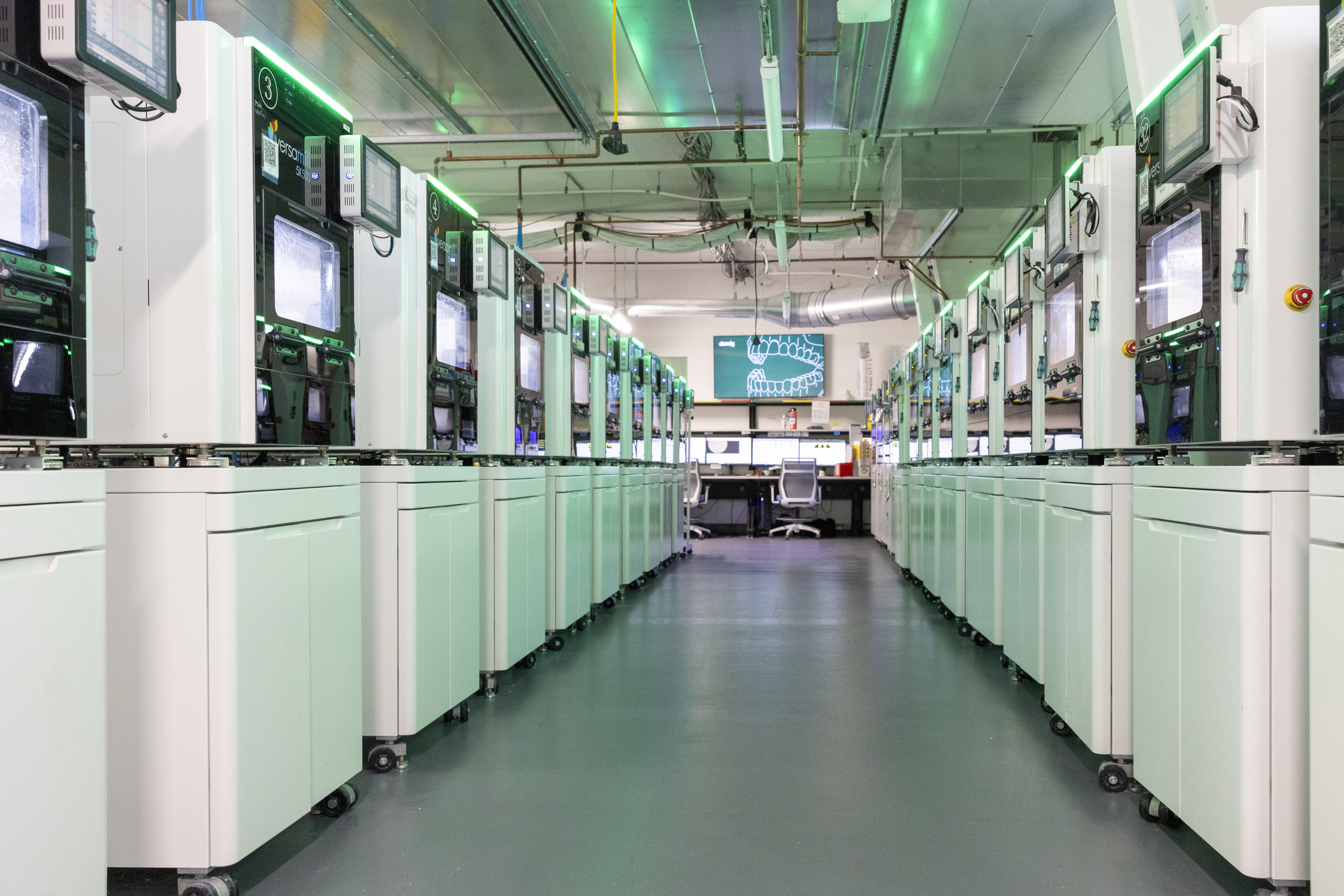
Ensuring scalability is critical not only for internal operations but also for continuing to meet the evolving needs of Dandy’s customers, dentists who rely on predictable turnaround times and consistently high-quality restorations to keep their practices running smoothly.
“Many doctors have been very excited to get started with digital dentistry,” McBride says. “Dandy has the ability to tell them, you do the scanning, we’ll do the rest and you’ll get a crown in five days instead of two weeks or more. That helps the practice earn up to their potential. Our goal is to help them achieve their full vision and operate on a larger scale.”
Battling operational bottlenecks
As Dandy’s business grew, however, bottlenecks appeared during the nesting process for milled products like crowns and bridges. For a full puck, nesting takes 20 to 30 minutes and involves a lot of manual steps, from margin marking to orientation to placement of the units.
“Our technicians were spending so much time on nesting,” says Aaron Chong, Manufacturing Department Manager at Dandy, who oversees milling operations. “Every week we had to go through a very painful ‘cold start,’ where the mills were just sitting there while our team worked on nesting.”
Bottlenecks would also appear during peak production times and seasonal spikes, and technicians had to prioritize jobs on their own. In these instances, technicians often started with easy units to get through their job queue as quickly as possible, instead of prioritizing by shipping date.
“These bottlenecks led us to investigate software that could handle this work automatically, allow a technician review phase, and then have the pucks ready for the mills right away,” McBride says.
The solution they landed on was Oqcam, AI-powered dental production software specifically designed for smart CAM workflow automation.
Elevating efficiency with Oqcam
When Dandy implemented Oqcam, they noticed a difference in efficiency immediately.
“Our technicians previously had to download a file from the CAD software, drag it into the CAM software, do all the prep work, then drag the file to a separate folder for the mills,” McBride says. “It was an extremely painful process with a lot of additional steps for the tech. Oqcam has completely removed those steps.”
Today, the digital design team receives orders and sends the models to a Dandy lab where they are automatically ingested into the Oqcam platform via API, eliminating the need to manually drag and drop files at all. This is not only more efficient, but it removes a common source of human error.
Oqcam software then automates the entire end-to-end preparation workflow, including part orientation, labeling, pin placement, and high-density nesting. It even handles disk selection by color, thickness, and available inventory.
“With Oqcam, we can actually nest the part before the intake process is finalized, which is a big win,” McBride says. “We’re not waiting for hours to get started, in other words. Once it’s nested and approved, Oqcam makes it easy to follow each part through the milling process.”
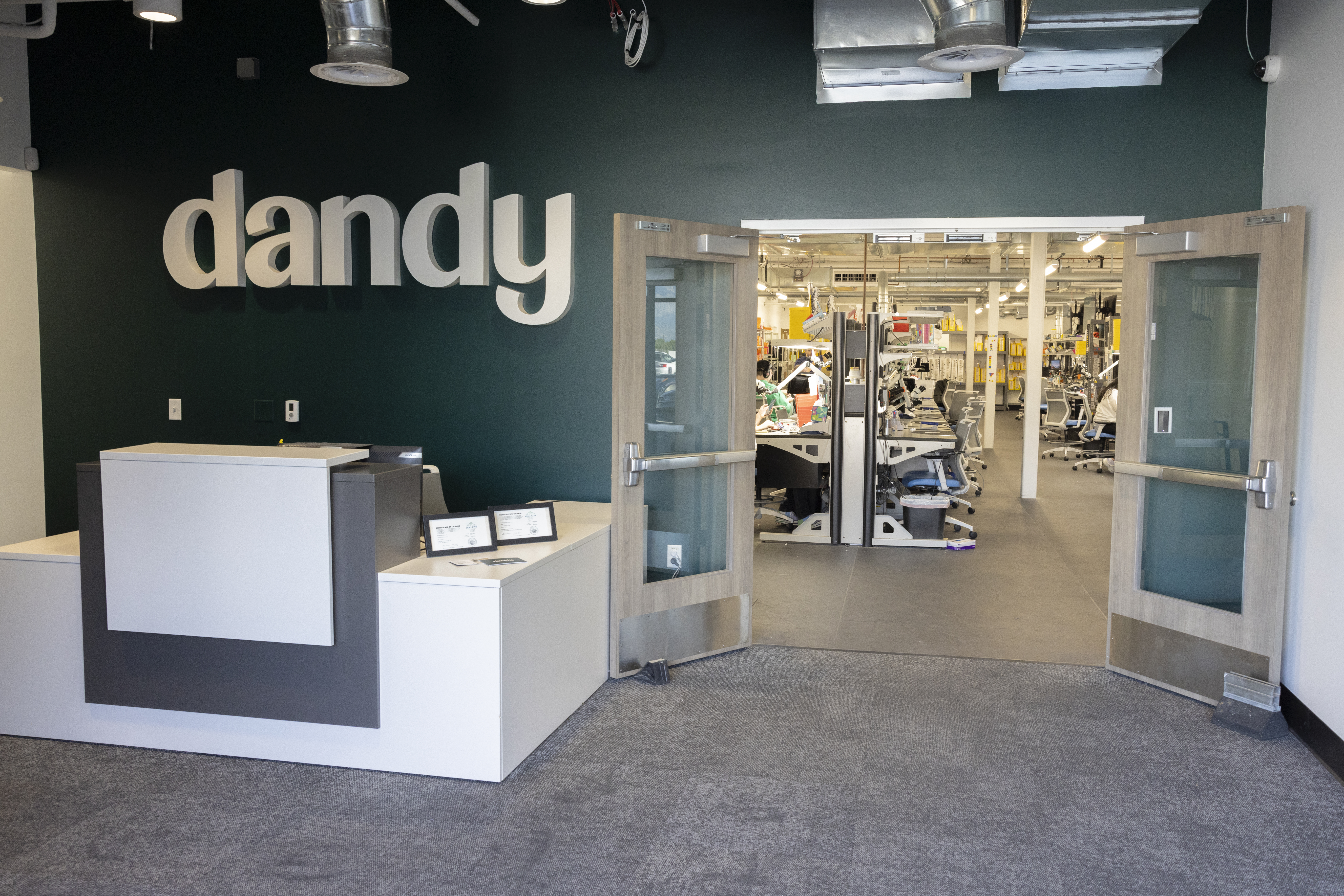
Freed from the responsibility of manual nesting, Dandy technicians are reaching new heights of productivity.
“Before we switched to Oqcam, my top technicians could average 300 units in one shift,” Chong says. “Now they are easily doubling that. Some technicians are hitting 900 units a day. Our fastest technician, who is also our most detail-oriented, had a personal best of 500 units a day before Oqcam. Now he is regularly finishing 1,200 units.”
In addition to this significant productivity boost, the Oqcam API enables Dandy to prioritize work automatically and ensure the rules are applied automatically and consistently, regardless of the technician.
“It’s been really helpful to automate all of the workflow planning on the back end before the order even gets to the lab,” McBride says. “We have peace of mind knowing that if an order comes in that meets specific criteria, we know exactly how to handle it.”
Accelerating technician onboarding
Workflow automation pays off in other ways too, making it easier to onboard new technicians and keep up with the company’s growth. Traditionally, training included how to drag and drop STL files and what to do if the old software crashed. Now the process is much more streamlined.
“If you can use a web browser, it’s very easy to learn the Oqcam process,” Chong says. “It’s very intuitive. Usually by day three, technicians understand the software and they’re ready to go. I used to give new techs a goal of 300 units per day. Now, they are hitting 600 units very easily.”
Partnering for higher productivity
Part of Dandy’s growth strategy is continuous improvement at every level of the business, including its digital workflow with Oqcam.
“Delivering the highest quality products to our customers on time is paramount to us. We are constantly thinking about how to make things smoother and improve our lab processes to make that possible,” McBride says. “We’re always playing with the Oqcam interface and coming up with ideas that we share with them.”
Oqcam frequently incorporates these suggestions from Dandy and other customers in new releases, which helps push the platform forward and improve the experience for all users.
“Our partnership with Oqcam has been very beneficial,” McBride says. “They are extremely responsive, always willing to jump on a call and talk through our ideas. We’ve been lucky to find a team that can help us scale and deliver on time, every time for our customers. I’m really grateful for that.”
 Facebook
 Twitter
 Linkedin
Subscribe to our newsletter
Get our best content straight in your inbox